Article: Witch Hazel: The Golden Holdout

Witch Hazel: The Golden Holdout
A native forest plant, an Indigenous remedy, and the most familiar botanical astringent in the world.

As autumn glides toward winter in the forests of eastern North America, the leaves fallen, the branches bare, the first hard frost not far off. And yet one modest shrub is quietly coming into bloom. Along its grey, leafless branches, witch hazel unfurls thin ribbons of pale gold: a last, improbable flare of life against the coming cold. It is a quiet wonder to come upon in the woods. And yet the plant’s deepest fame lies far from the forest — in the plain bottle on a bathroom shelf, where witch hazel has become the most familiar botanical astringent in the world.
It is Hamamelis virginiana — American witch hazel — and its journey from the forest floor to nearly every medicine cabinet in the country is one of the great quiet success stories of North American botany.
A Plant of the American Woods
Long before it could be found in a bottle, witch hazel was a woodland staple of Indigenous North America. Native peoples across the eastern woodlands knew the shrub well and turned to its bark, leaves, and twigs. The Iroquois brewed the leaves into tea for colds and sore throats, and pressed steeped leaves onto sprains and bruises. The Potawatomi laid young branches on the hot stones of their sweat lodges, letting the steam ease aching muscles. Others simmered the stems, extracting its medicine, and used the cooled liquid to bathe cuts, inflamed skin, and sore eyes. The Osage turned to the bark for stubborn sores. This was empirical knowledge in the truest sense — tested, refined, and handed down across countless generations — and every bottle created since owes a debt to the peoples who first coaxed its virtues from bark and leaf.

The Meaning of the Name
Though it’s tempting to believe the name witch hazel has ties to sorcery, its origins are far less mystical. “Witch” here descends from an old English word — wice, or wych — meaning bendable or pliant, the same root that gives us “wicker.” Witch hazel’s springy, forked branches were long the favored wood for dowsing rods, the Y-shaped sticks once used to search for water underground, held out while the branch was watched for its telltale dip toward a hidden spring. The Mohegan people of present-day Connecticut are credited with showing early settlers how well witch hazel’s forked branches served for dowsing; the settlers took up the practice, and the name took hold. The art came to be called “water witching,” and to anyone watching a forked stick dip of its own accord toward hidden water, it must have seemed a kind of magic. The “witch” in witch hazel is, in the end, simply a very old word for a branch that bends.

This unique shrub is known by another name as well: snapping hazel. After taking a full year to ripen, its seed capsules burst open in autumn just as the new flowers appear — splitting with an audible snap and flinging their glossy black seeds as far as thirty feet. Few plants bloom and scatter their seed in the same breath; witch hazel does both, on the same bare branches.
From Forest to Medicine Cabinet
The leap from wild shrub to household name came in the 1840s. Theron T. Pond, a pharmacist in Utica, New York, developed a way to distill witch hazel into a clear, shelf-stable extract — by the company’s own telling, drawing on a method he learned from an Oneida healer. It went to market in 1846 as “Golden Treasure,” and later became famous simply as Pond’s Extract.
This was the golden age of the patent medicine, and Pond’s Extract was sold with all the confidence of its era. Advertisements promised relief “for all pain,” and trade cards billed it as “The Vegetable Pain Destroyer” — “vegetable” being the nineteenth-century word for anything from the plant kingdom, offered as a gentler alternative to the mercury and arsenic in so many remedies of the day. It was, in its way, the original plant-based promise. Rivals went further still, one bottle vowing to be “Good for a Thousand Ills.” When the Pure Food and Drug Act of 1906 reined in such claims, witch hazel simply settled into the role it fills to this day.

Distilled witch hazel spread into virtually every American drugstore, where it has remained ever since — one of the very few wild botanicals to make that leap and never fall out of favor. The Pond’s name lives on too, on the jars of cold cream the company introduced in the early 1900s, though few who buy them today know the brand began with a woodland shrub.
Why Skin Reaches for It
Witch hazel’s appeal begins with the plant itself. Its bark and leaves are naturally rich in tannins — plant compounds that give witch hazel its gently astringent quality, that clean, toning, freshly-swept feel on the skin. A preparation that keeps those tannins leaves skin feeling clarified and refreshed, and it’s mild enough to suit sensitive skin. It simply tones and refreshes, which is exactly why witch hazel has stayed a cornerstone of cleansing and everyday skincare for the better part of two centuries.

What the Science Says
Modern laboratory work has begun to explain what generations only observed. Witch hazel’s bark and leaves are unusually rich in polyphenols — hamamelitannin and proanthocyanidins chief among them. A 2025 study in the journal Molecules found that both leaf and bark extracts were strong antioxidants, sharply lowering reactive oxygen species in skin cells, and that the bark extract also inhibited collagenase and elastase — the enzymes that break down the skin’s collagen and elastin over time. Earlier research had shown that the plant’s procyanidins encouraged the renewal of cultured skin cells and reduced water loss and visible redness in skin deliberately irritated with a detergent in the lab. A recent review of this literature concluded, simply, that witch hazel has a real, measurable place in modern skincare.
Witch Hazel in the Vitalitree Formulary
Most tattoo studios have a bottle of witch hazel within arm’s reach. Tattooers have relied on it for generations primarily for its practical, astringent touch at every stage of a session.
Before: Diluted and wiped over the skin as part of prep, it firms and tones the surface, giving the artist a smoother canvas to work on.
During: Artists use it to wipe away excess ink and blood, and a dab on a swab helps settle minor bleeding. Many prefer it to plain distilled water for its calming effect on redness and swelling as they work. It doubles as a diluent as well: artists use witch hazel to thin black ink into the soft gray washes behind so much fine shading, and it’s a common ingredient in ink mixing solutions.
After: A final wipe helps calm post-session redness and swelling, and some artists suggest a gentle spritz of an alcohol-free witch hazel between washes in the first days of healing, followed by a moisturizer.
In that sense, the tattoo studio is simply the newest chapter of a very old story — the same astringent qualities the eastern woodland peoples relied on for cuts and inflamed skin, put to work wherever skin needs calming.
A few honest caveats. Most witch hazel on store and studio shelves is distilled, and distillation leaves nearly all of the plant’s tannins behind. Much of the familiar drugstore bottle’s bite comes instead from the roughly 14 percent alcohol added to it, which can dry and irritate fresh, open skin, so alcohol-free versions are generally the better choice for aftercare. Witch hazel shines during and just after a session; leaned on too heavily as a daily healing product, its astringency can over-dry a healing tattoo. And no, it won’t fade your ink. Good hygiene and your artist’s aftercare instructions always come first. Witch hazel is a helper, not a replacement.
While tepezcohuite is the heart of the Vitalitree line, witch hazel is its steadfast companion, and it works hardest in the products designed for the artist's benefit. In our Cleanse Concentrate, made for professional studio dilution, witch hazel joins tepezcohuite and yarrow in a gentle, low-foaming wash that lifts away ink and blood, while its natural astringency helps calm redness and irritation as the session goes on. In our Relief Spray, the same trio of natural astringents helps minimize bleeding, redness, and irritation, so the artist can keep working on a clear, calm canvas.
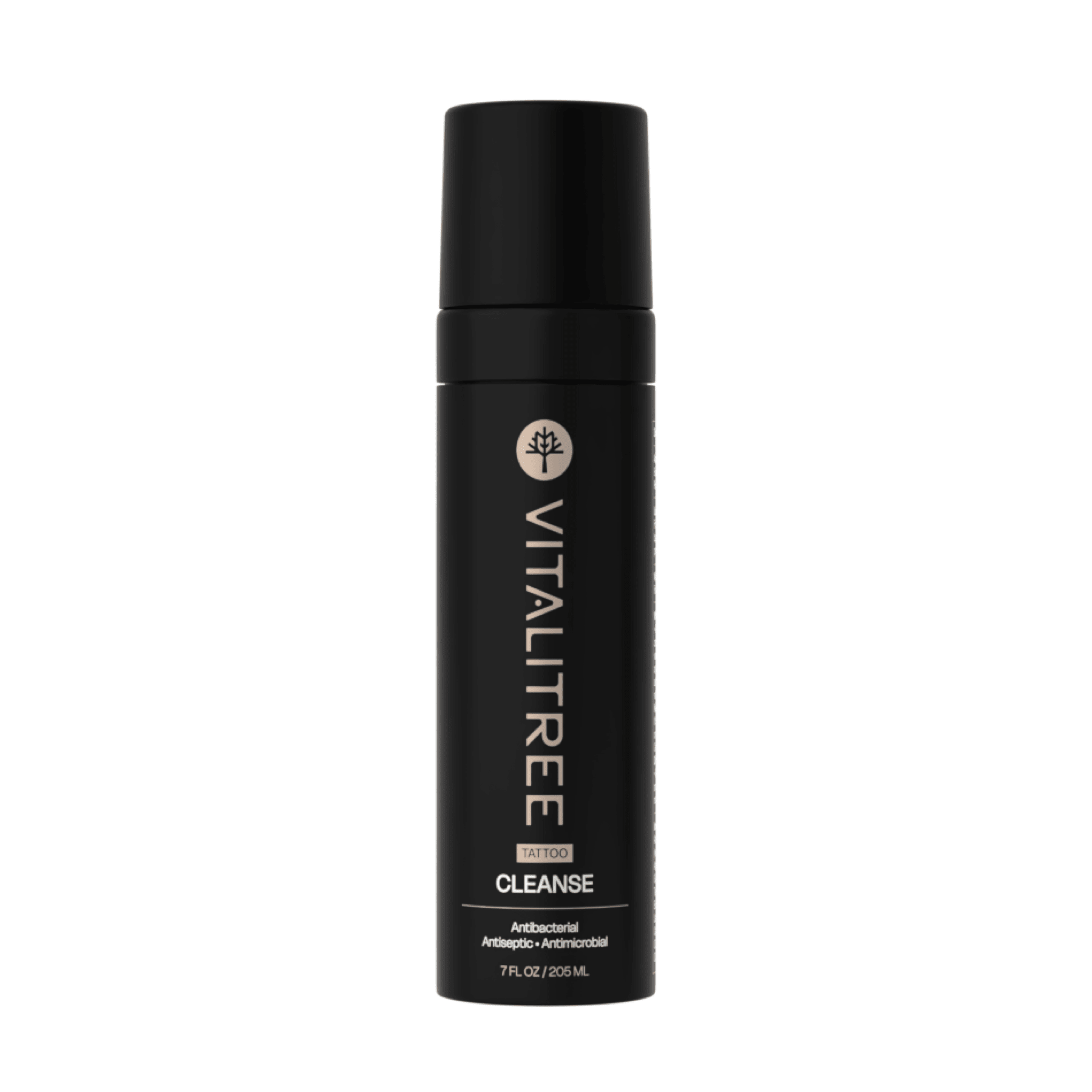
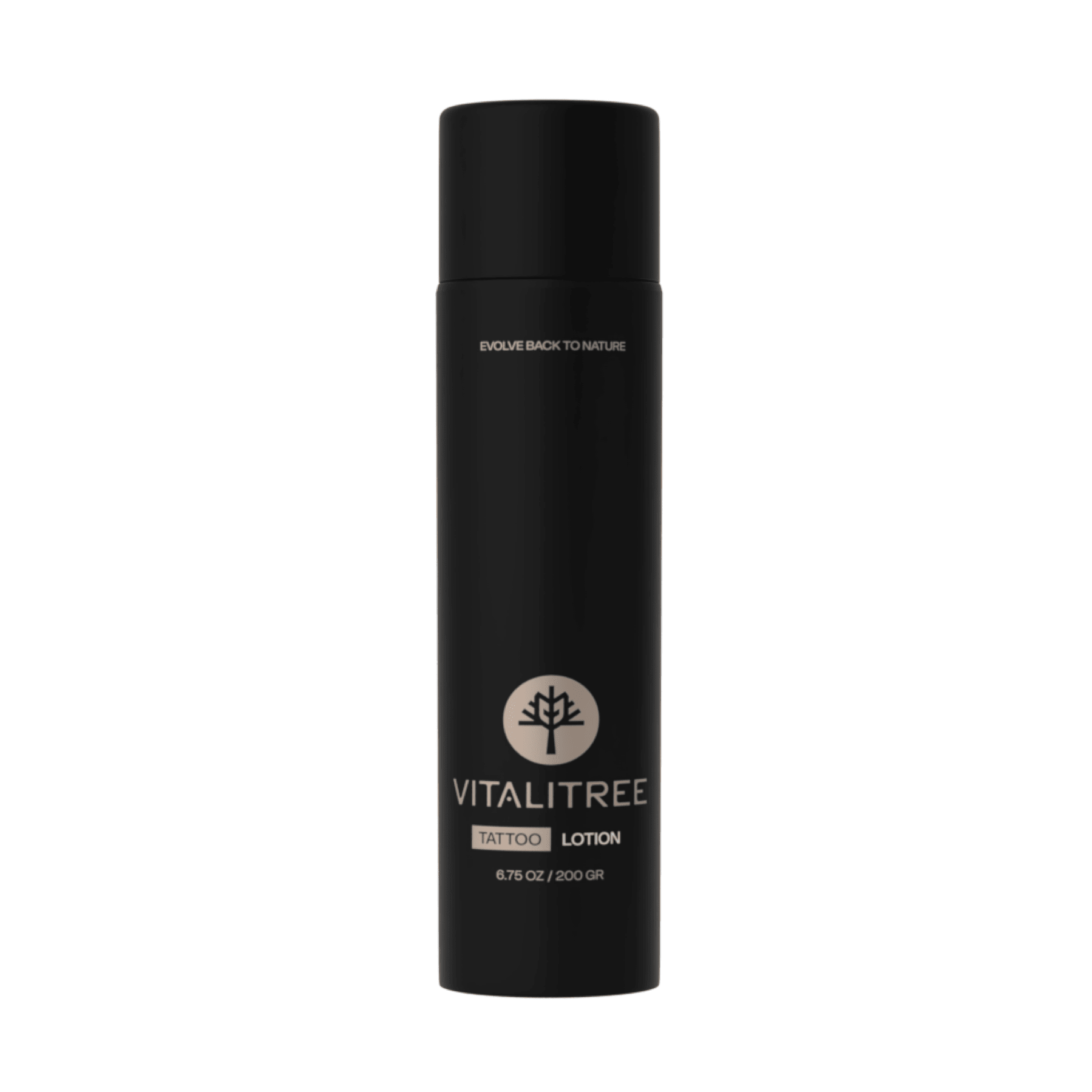
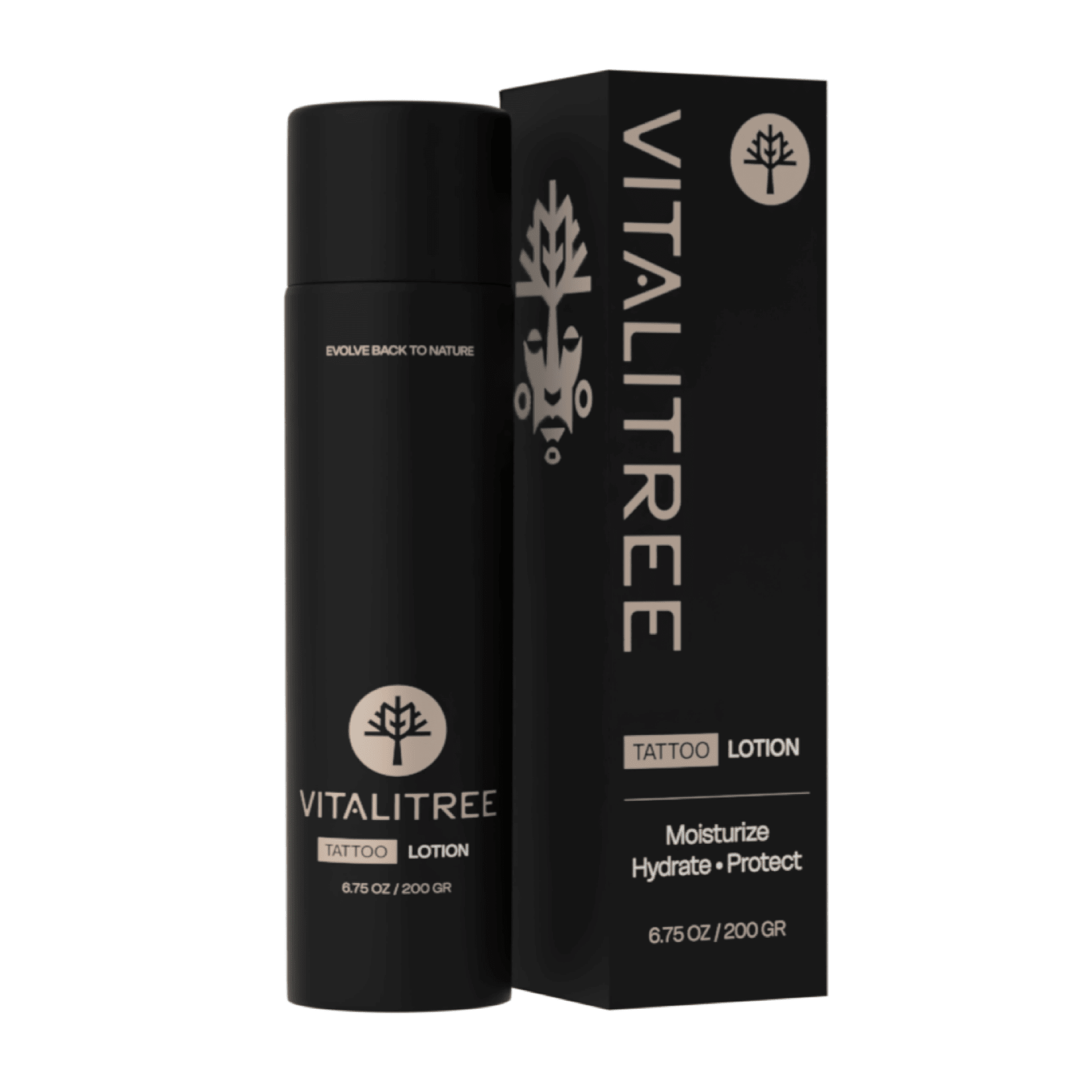
You’ll also find witch hazel in our Tattoo Cleanse and our Tattoo Lotion. We prepare all of our botanical extracts in-house, without alcohol, and our witch hazel starts with the bark, the most tannin-rich part of the plant. Unlike distilled witch hazel, our water and glycerin infusion effectively retain those tannins, the compounds behind witch hazel’s soothing, astringent action.
Nursery and Lantern
Perhaps the loveliest part of witch hazel’s story lies back in the woods. Witch hazel blooms so late that most of the insects that would carry its pollen are already gone for the season. Its flowers are left to a small, cold-hardy few — chiefly the winter-flying owlet moths, whose strange gift the naturalist Bernd Heinrich was among the first to explain. To take wing on a freezing night, these moths shiver their flight muscles until they have raised their body temperature by as much as fifty degrees above the frozen air, then lift off to visit the only flower still open in the wood. It is a quiet partnership: the moths find a rare meal in the depths of the cold, and the flowers find the only messengers left to carry their pollen.

And witch hazel’s ties to moths reach beyond that single winter visit. Through the warm months, the shrub is also a nursery: its leaves feed the caterpillars of the witch hazel dagger moth, a different moth entirely, named for the very shrub that raises it. So witch hazel keeps company with moths across the whole turning of the year — feeding the dagger moth’s young through summer, and offering the winter owlets the only flower still open in the cold. It is nursery and lantern both: a cradle in summer, a beacon in the dark of the year.

There is something almost unbearable in the image — a single gold bloom on a bare branch, and a moth that must tremble itself warm to reach it — two small lives keeping the season of beauty alive after everything else has surrendered to winter. That, in the end, is what witch hazel has always done: it offers its quiet gift exactly when the world least expects it, and perhaps needs it most.
Sources & Further Reading
• The Wonders of Witch Hazel (Haverford College Arboretum)
• Witch Hazel: Its History, Benefits, and Uses (Gaia Herbs)
• Hamamelis virginiana (Wikipedia)
• Witch Hazel: Patent Medicine (University of Vermont Libraries)
• Pond’s Extract Company (Cosmetics and Skin)
• Witch Hazel bottles and history (Federation of Historical Bottle Collectors)
• The Folklore and Medicine of Witch Hazel (Chestnut School of Herbal Medicine)
• Witch Hazel: Traditional Medicinal Uses (University of Vermont Libraries)
Image Credits
• Header: Witch hazel in full bloom among golden autumn leaves against a blue sky
• American witch hazel in bloom. Photo by Katja Schulz, via Wikimedia Commons, CC BY 2.0. Cropped.
• Flowers and seed capsules. Photo by Krzysztof Ziarnek (Kenraiz), via Wikimedia Commons, CC BY-SA 4.0. Cropped; this version is shared under the same license.
• Dowser with a forked rod, from Georg Agricola’s De re metallica (1556). Public domain; scan courtesy of the National Library of Poland, via Wikimedia Commons.
• Pond’s Extract trade card. Public domain; Miami University Libraries, via Wikimedia Commons.
• Hamamelis virginiana, from Köhler’s Medizinal-Pflanzen (1887). Public domain, via Wikimedia Commons.
• Sallow moth (Eupsilia). Photo by Andy Reago & Chrissy McClarren, via Wikimedia Commons, CC BY 2.0. Cropped.
• Witch hazel dagger moth caterpillar. Photo by Katja Schulz, via Wikimedia Commons, CC BY 2.0. Cropped.