Article: Pride and Prejudice: The Dramatic Tale of Tattoo Ink
Pride and Prejudice: The Dramatic Tale of Tattoo Ink
A story of art, beauty, and fear — soot and science, poison and panic — and the long journey of the ink we put beneath our skin.
Throughout time, art has claimed its victims. For centuries, painters ground lead into white paint and paid for it in agonizing stomach cramps and trembling hands. From the 1700s until the 1940s, hat makers shaped felt with mercury until their minds unraveled. Victorian artists loved an arsenic-laced green so vivid that few questioned its safety, and in the 1880s, some believe, Van Gogh’s own paints poisoned him, drove him mad, and pushed him toward suicide. In the 1910s and ’20s, young women painting glowing watch dials with radium would lick their brushes to a fine point, and the radium settled in their bones until those bones began to crumble within their flesh. In every case, the victim was the artist. But in tattooing, it was the canvas — the client — who paid the price.
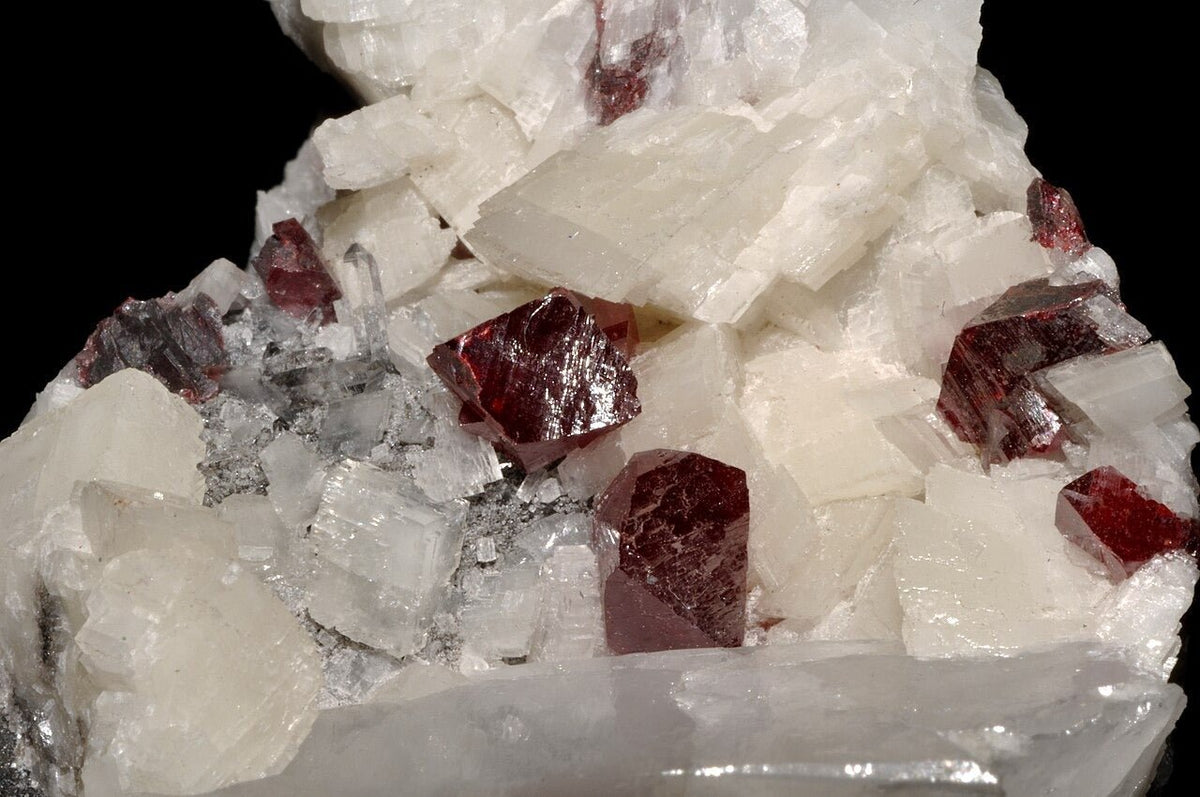
 Cinnabar — mercury sulfide, the mineral behind history’s most beautiful, and most dangerous, red.
The history of tattoo ink is not a tidy march from primitive to perfected. It is a long, dramatic tale of lust for beauty going too far, of fear breeding prejudice, and of science finally catching up to the needle. And it comes with a cast of dangerous beauties: a red so brilliant it hid mercury in its heart; blues, greens, and yellows drawn from cobalt, chromium, and cadmium; a city so frightened of the needle that it banned tattooing for 36 years; and, at last, scientists asking what was really inside the bottle. Yet here is the strange heart of this story: the oldest tattoo ink of all, far older than that treacherous red, was one of the safest ever used.
The First Ink: Soot and Ash
To find the first ink, we have to go back more than five thousand years — to a man who died on a mountain and was kept by the ice. When hikers found Ötzi, the “Iceman,” frozen high in the Alps in 1991, they had stumbled onto the best-preserved human being of the ancient world, and across his skin were some of the oldest tattoos ever found. Sixty-one of them: small groups of lines and crosses on his lower back, abdomen, lower legs, and left wrist. For decades, researchers assumed someone had cut his skin and rubbed soot into the wounds. But a 2024 study, in which a tattoo artist recreated the marks on his own skin using ancient tools, found they were almost certainly hand-poked — pricked in with a sharpened bone or copper awl carrying black soot on its tip, the same basic technique hand-poke artists still use today. And the marks had held for five millennia. Many sit over joints and a spine worn down by arthritis, and a 1999 study found that most of them lie on or near points still used in acupuncture today, including points used to treat back pain. Perhaps the tattooing itself was the treatment, the repeated pricking doing its work and the soot simply left behind. Or perhaps the marks were a map, showing where to treat him again. Either way, the oldest tattoos we know of may have been made not for beauty, but for healing.

The tattooed lines on Ötzi’s left wrist, pricked into his skin with soot more than 5,000 years ago.
That ink is the quiet hero of the whole tale. Carbon — soot, ash, charred wood — is very nearly inert; the body, for the most part, simply leaves it alone. Cultures across the world reached for the same humble material: in Japan, the soot of pine or plant oil was pressed into the deep blue-black ink called sumi; elsewhere, people used ochre and the dyes of plants. For thousands of years, the ink beneath human skin was little more than the leavings of a fire. It was plain, it was black, and it was, in hindsight, remarkably safe. The danger came later. And it came, as danger so often does, dressed as beauty.
The Hunt for Color — and Its Price
Black was never going to be enough. People wanted color — the brighter and bolder, the more desirable — and to find it they reached into the earth and the chemist’s shelf, and dipped into the very poisons of the periodic table. Every new color was a dance with danger, and each one kept its own dark secret.
Red was the most beloved color of all, and the most treacherous. For centuries, the most brilliant scarlet a tattooist could find came from cinnabar — a glittering, blood-bright crystal so toxic that the Romans sent slaves and convicts to mine it, and few of them lasted long at the task. Ground fine and worked into the skin, it made a seductive red like no other. But beneath that beauty lay something darker: cinnabar is laced with mercury. The very color that made a tattoo so striking could transform, months or even years later, into itching, swelling, and weeping sores, as the body turned against the poison set permanently inside it. These “red reactions” could flare into raised, angry welts long after a tattoo had healed. Of all the colors, red has always been the one most likely to betray.
And red kept grim company. Yellow was often cadmium, which could swell and react in sunlight, as though the skin had become allergic to daylight itself. Green was drawn from chromium and blue from cobalt, and lead found its way into some of the old yellows and greens — a lurid palette of heavy metals inserted indelibly beneath the skin. These were the pigments that first made tattoos sing in full color. They were also, quietly, the pigments that made them dangerous. It was pride and vanity that drove the search for brilliance, but it was the flesh that paid for it.
 The rogues’ gallery — the toxic metals behind the colors: cobalt (blue), chromium (green), cadmium (yellow), and lead (found in some old yellows and greens).
The metals themselves were only part of the problem. Behind every bottle of color was a supply chain few clients ever saw. By the early 1900s, tattooing had become a thriving business, and many tattooists bought their colors from tattoo suppliers, but those suppliers didn’t make the pigment. They bought it from paint and chemical companies and resold it. Tattooists found what worked largely by trial and error, combing chemical catalogs, sending away for samples, and testing the results on their own skin. Because manufacturers were wary of selling pigment meant for human skin, some tattooists deliberately hid what it was for, ordering under invented company names as if they painted signs or toys.
And where there was demand, there were knockoffs. By 1925, Percy Waters, one of the country’s biggest tattoo suppliers, was warning in his catalog: “Use only the best colors purchased from reliable dealers. They are chemically pure and harmless to the skin, while imitation colors sold by so-called importers, are nothing more than common house paint, and likely poison.” Waters was a dealer himself, of course, vouching for his own colors. But a warning like that only makes sense if it was known that some tattooists were already buying the imitations.
 Percy Waters’ tattoo supply catalog, Detroit, c. 1925. His warning about “imitation colors” sits under “Mixing Colors,” bottom left.
The Unseen Danger
However, the greatest danger wasn’t the ink at all. It was the needle itself. The same needles were used over and over, passed from one customer to the next without being sterilized in between. Blood from one client could ride the needle straight into the next, carrying bloodborne diseases like hepatitis and syphilis. Additionally, pigments were sometimes thinned with spit. And so the tattoo needle became a small, efficient highway for disease, carrying tetanus and, in grim nineteenth-century case reports, even tuberculosis — passed from mouth to skin when a tattooist wet his needles with his own saliva. The art meant to mark a body for life could, now and then, be the very thing that ended it.
 Sailors watch a shipmate being tattooed on the deck of the USS Olympia, 1898.
Did People Actually Die?
Yes, sometimes they did. But no one knows how many people really died. In 1862, one diligent French naval doctor recorded eight deaths from tattooing. Other doctors may well have seen the same thing but never made the connection. Tattooing was a particularly unusual route of transmission, and an infection could take days or weeks to show. In the 1800s, epidemiology, the science of tracking how disease spreads, was still in its infancy, and no one was systematically counting. A 2025 review of tattoo infections worldwide could find just 14 recorded deaths since 1820, but the true number was surely higher. The danger was infection — sepsis, tetanus, hepatitis, tuberculosis — carried by unclean tools rather than by the color itself. The toxic pigments did their harm more slowly: skin reactions, hard lumps, and a lifetime of heavy metals held quietly in the skin. Together they made tattooing a genuine risk. Apart, each was a smaller menace than the headlines would later claim. And today? Since 2000, just four tattoo-related deaths have been recorded worldwide, at a time when roughly one in three American adults has a tattoo. By comparison, lightning kills more than a dozen Americans every year. Those are odds most of us never think twice about. Today, with a licensed artist, sterile single-use needles, and good aftercare, getting a tattoo is a remarkably safe choice.
The Great Scare: How Fear Banned Tattooing in New York City for 36 Years
Nowhere did fear outrun fact more completely than in New York City. On October 10, 1961, The New York Times ran the headline “City Bans Tattoos as Hepatitis Peril.” The Board of Health had amended the Health Code to make tattooing illegal except for medical purposes, and ordered the city’s last eight parlors, three in Manhattan and the rest in Coney Island, to close by November 1. Its evidence: thirty cases of hepatitis and one death traced to tattooing since mid-1959. The cases were real. But so were the 6,000 to 10,000 New Yorkers getting tattooed every year, and the city chose not to clean the parlors up but to close them down. Scapegoating the tattoo parlors suited the city perfectly. More than one historian has noted that the city had other motives, among them a wish to scrub up its image before the 1964 World’s Fair.

“City Bans Tattoos as Hepatitis Peril,” The New York Times, October 10, 1961.
The irony was hard to miss. Only two decades earlier, at the 1939 World’s Fair, the fully tattooed Betty Broadbent had been a star of the fair’s beauty pageant. Now the city was banning tattooing to tidy itself up for the next one.
 Betty Broadbent, the “Tattooed Venus,” Sydney, 1938.
The ban held for thirty-six years. It drove an entire craft underground, where it was practiced in secret and at risk in back rooms, basements, and second-floor apartments. Thom deVita opened a shop in Alphabet City the day after the ban took effect, working late at night and taking just five clients a day. Ed Hardy, who would become one of the most influential tattooists of his generation, set up shop for a couple of weeks in an apartment near Washington Square Park. A Coney Island tattooist named Fred Grossman took the city to court to win his trade back, and lost, and lost again on appeal. Not until 1997 did New York finally make tattooing legal once more — and when it did, the mayor’s own office acknowledged that the city had not recorded a single case of hepatitis B transmitted by tattooing in all the years since the ban. By then the panic that had justified it looked like exactly what it had always been: fear dressed in the language of public health. The prejudice in this story’s title is not a figure of speech. It cost a craft thirty-six years.
 The Bowery at Coney Island, c. 1903 — the world New York would drive underground.
The Cleanup: Needle, Autoclave, and a Man Called Sailor Jerry
While New York was outlawing the needle, a tattooist in Honolulu was quietly establishing how to make it safe. His name was Norman Collins, and the world would come to know him as Sailor Jerry. He was a brilliant, restless, exacting man who treated cleanliness as a point of honor. He is credited as one of the first tattooists to use single-use needles, and his studio was among the first to sterilize equipment in an autoclave, the way a surgeon would. He chased better color, too, developing his own brighter and more stable pigments, and he became one of the first Westerners to trade techniques and designs with the great tattoo masters of Japan — proving, once and for all, that vividness and care were never truly enemies. With the autoclave and the single-use needle, the craft that fear had buried began, slowly, to professionalize into something a person could trust.
 A mid-20th-century hospital autoclave, the kind of steam sterilizer Sailor Jerry brought into the tattoo shop.
Safer Than Ever
The story didn’t end with the cleanup. In 2022, the United States gave the FDA new power over tattoo inks, and Europe set strict limits on the chemicals allowed in them. American ink makers must now register with the FDA, list their products, and report serious reactions, and in 2024 the agency issued guidance on keeping inks free of contamination. Today’s inks are more closely studied and regulated than at any time in history.
Full Circle
And so the wheel comes round. The oldest ink was soot — simple, carbon, safe. Then came the long centuries of brilliant, dangerous color, and the fear that trailed close behind, and at last the slow, hard work of making the craft clean again. Today the movement runs unmistakably back toward simplicity: toward purer pigments, gentler ingredients, fewer unknowns in the bottle — a whole industry inching its way back toward the kind of purity it began with, five thousand years ago, on a mountain, in a man kept by the ice. It is the same instinct that guides everything we believe at Vitalitree: that the natural world, approached with knowledge and care, is usually the wiser teacher. The tale of tattoo ink is, in the end, the tale of that lesson learned the long way around.
From the soot in an ancient wound to the careful science of today, the ink has never been only beautiful and never only dangerous. It has always been both — a little pride, a little peril, pressed permanently into the skin. The story of making it safer is still being written. But if the long arc of this tale means anything, it is that the craft keeps bending, slowly and stubbornly, back toward the light. Sometimes the way forward is to evolve back to nature.
Sources & Further Reading
• The 61 Tattoos of Ötzi, the 5,300-Year-Old “Iceman” (Smithsonian Magazine)
• The History of Pigment (Tattoo Archive, C. W. Eldridge, Harriet Cohen and Eric McKay)
• Tattoo history at The Henry Ford, on Percy Waters’ 1925 catalog (The Henry Ford)
• Tattoo-associated skin reactions (DermNet)
• 32% of Americans have a tattoo, including 22% who have more than one (Pew Research Center, 2023)
• Lawrence O’Kane, “City Bans Tattoos as Hepatitis Peril” (The New York Times, October 10, 1961)
• Tattooing Was Banned in NYC for Nearly 40 Years (Gothamist)
• Tattooing Was Illegal in New York City Until 1997 (Smithsonian Magazine)
• Tattooed New York at the New-York Historical Society (Hyperallergic)
• Grossman v. Baumgartner, 17 N.Y.2d 345 (New York Court of Appeals, 1966)
• FDA Issues Final Guidance on Tattoo Inks (U.S. Food and Drug Administration, October 2024)
• The Ink Is Dry: FDA Issues Final Guidance for Tattoo Industry, on MoCRA (Crowell & Moring)
• Tattoo inks and permanent make-up — REACH restriction (ECHA)
Image Credits
Images are credited below where licensing requires it. Public-domain works need no credit.
• Cinnabar on dolomite — photo by JJ Harrison, via Wikimedia Commons, CC BY-SA 3.0.
• USS Olympia (C-6), 1898 — U.S. Naval History and Heritage Command, NH 43393 (public domain).
• Percy Waters tattoo supply catalog, Detroit, c. 1925 — photos: Bray & Co.
• “City Bans Tattoos as Hepatitis Peril,” by Lawrence O’Kane — The New York Times, October 10, 1961.